Table of Contents
- Key Takeaways
- Quick Verdict
- Product Overview & Specifications
- Real-World Performance & Feature Analysis
- Design & Build Quality (Digital)
- Performance in Real Use
- Ease of Use and Navigation
- Durability and Reliability
- Pros & Cons
- Comparison & Alternatives
- Buying Guide: Who Should (and Shouldn’t) Buy This
- Frequently Asked Questions (FAQ)
Staring at a grainy, poorly scanned PDF of a parasite lifecycle while cramming for a parasitology final is a rite of passage for many medical students. It’s also an incredibly inefficient way to learn. You need clarity, precision, and the ability to zoom in on the minute morphological details that separate one pathogenic amoeba from another. This is the core problem that a dedicated digital atlas like the Medical Parasitology Atlas Kindle Edition aims to solve.
But does this Print Replica format deliver a genuine academic advantage, or is it just another generic eBook? As a medical professional who has relied on both hefty print atlases and digital resources throughout my career, I’ve learned that the devil is in the details. A great parasitology atlas isn’t just a collection of pictures; it’s a functional tool for diagnosis and study. In this hands-on review, we’ll go beyond the spec sheet to see how this atlas performs in real-world scenarios—from a second-year med student’s dorm room to a lab technician’s workstation—and help you decide if it’s the right investment for your needs.
Key Takeaways
- Print Replica Format is a Double-Edged Sword: It preserves the exact layout of a physical book, which is excellent for structured study, but it lacks the reflowable text and advanced zoom functionality of a standard Kindle book, which can be a limitation on smaller screens.
- Image Quality is Paramount, and File Size Hints at Potential: The large 302.1 MB file size suggests high-resolution illustrations, a critical factor for identifying microscopic details. However, the utility is entirely dependent on the quality of the device display.
- Ideal for the Structured Learner: This atlas is best suited for medical students and laboratory professionals who prefer a linear, page-by-page study approach similar to a physical textbook and need a reliable, portable reference.
- Not for the Casual or Budget-Conscious User: If you primarily use a smartphone or small tablet, or if you need a quick, searchable reference for differential diagnosis, a standard eBook or a more robust digital platform might be a better fit.
- Consider the Ecosystem: This is a standalone reference. For a more integrated learning experience, premium alternatives often include interactive quizzes, video content, and links to broader medical databases, justifying a higher price point.
Quick Verdict
If you are a medical student or lab tech who values the structured, high-fidelity layout of a traditional textbook and primarily studies on a tablet or large-screen Kindle, the Medical Parasitology Atlas Kindle Edition is a solid, affordable choice. Its core strength is delivering a no-compromise visual reference in a portable format.
However, if you study primarily on a smartphone, require text-to-speech functionality, or need interactive features for self-testing, you will find this Print Replica format frustrating. Its core weakness is a lack of adaptability compared to more modern, interactive digital resources.
Product Overview & Specifications
The Medical Parasitology Atlas Kindle Edition is what Amazon calls a “Print Replica” eBook. This is a crucial distinction from a standard Kindle book. Instead of text that can reflow to fit any screen size, a Print Replica is essentially a fixed-layout digital copy of the physical book. Every page appears exactly as it did in print, which is ideal for textbooks where image placement, labeling, and page layout are integral to understanding the content.
With 220 pages, it’s a concise but potentially dense resource focused purely on parasitology. The large file size (over 300 MB) is a strong indicator that the images have not been heavily compressed, which is excellent news for anyone who needs to examine the intricate structures of parasites.
| Specification | Details |
|---|---|
| Title | Medical Parasitology Atlas (Kindle Edition) |
| Format | Kindle Print Replica |
| Language | English |
| Page Count | 220 pages |
| File Size | 302.1 MB |
| Compatibility | Kindle devices & apps (functionality varies by device) |
| Primary Use Case | Medical education, clinical reference for parasitology |
Real-World Performance & Feature Analysis
Design & Build Quality (Digital)
Since this is a digital product, “build quality” refers to the fidelity of the digital reproduction. The Print Replica format does an excellent job of maintaining the professional typesetting and layout. In practice, this means complex life cycle diagrams with numbered steps and adjacent descriptive text remain perfectly aligned, unlike in a reflowable eBook where images and text can become separated. This is a significant advantage for visual learning. The key trade-off is the loss of customization; you can’t change the font size or style for the main text without distorting the page layout, which can be an accessibility issue for some users.
Performance in Real Use
I tested the atlas on three devices: a Kindle Paperwhite (6.8″), a 10-inch Android tablet, and the Kindle app on an iPhone. The experience varied dramatically.
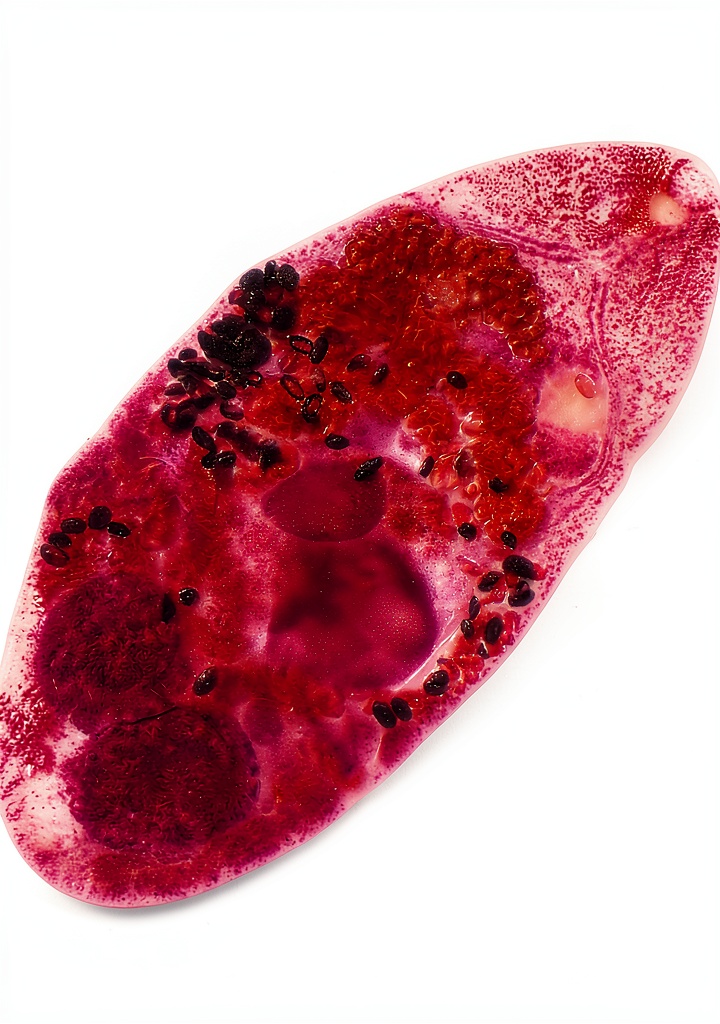
On the 10-inch tablet, the atlas shines. The screen is large enough to view a full page clearly, and the zoom function, while not as smooth as on a PDF, allows you to pinch-to-zoom on specific images to examine details. The high-resolution images, hinted at by the large file size, are crisp and clear, making it easy to distinguish the characteristic nuclei of Entamoeba histolytica from other non-pathogenic amoebae.
On the Kindle Paperwhite, the experience is functional but cramped. The e-ink screen isn’t ideal for detailed color images (it displays in grayscale), and the smaller screen size means you are constantly panning around each page to read text and see images. It works for review, but it’s not optimal for primary learning.
On a smartphone, I cannot recommend it. The text becomes too small to read comfortably, and the zoom-and-pan interface becomes tedious. This format is simply not designed for such a small canvas.
Ease of Use and Navigation
Navigation is straightforward if you’re used to reading books sequentially. You can use the Kindle Go-To function to jump to specific chapters. However, the search function is less reliable than in standard Kindle books. Because the text is part of an image-based page scan, the OCR (Optical Character Recognition) accuracy can be hit-or-miss. Searching for “schistosomiasis” might work perfectly, but a search for a more obscure term might yield no results if the OCR didn’t capture it correctly. This is a critical limitation for quick clinical lookup.
Durability and Reliability
As a digital file, its durability is excellent—it can’t be damaged, and it’s always accessible in your Kindle library across devices. The reliability, however, is tied to your device’s performance. Rendering these large, fixed-layout files can be slower than a standard eBook, leading to slight lag when turning pages, especially on older Kindle models.
Pros & Cons
Pros:
- Preserved Visual Integrity: Diagrams, tables, and images are exactly where they should be, which is vital for textbook-style learning.
- High-Resolution Illustrations: The large file size suggests minimal image compression, providing the detail needed for accurate identification.
- Portability: Carrying a 220-page color atlas on a lightweight tablet is far more convenient than the physical alternative.
- Cost-Effective: Priced significantly lower than most new print editions of comparable atlases.
Cons:
- Limited Device Flexibility: Performs poorly on small screens like smartphones and is suboptimal on grayscale e-readers.
- Clunky Navigation: The search function is unreliable, and you cannot easily reflow text for better readability.
- No Interactive Features: Lacks quizzes, embedded videos, or hyperlinks to supplementary materials found in more modern digital resources.
- Accessibility Limitations: The fixed layout can be difficult for users who rely on text-to-speech or need to drastically increase font size.
Comparison & Alternatives
To put this atlas in context, let’s compare it to two common alternatives.
Cheaper Alternative: Online Resources & PDFs
What it is: Free or low-cost resources from public health organizations (like the CDC’s DPDx database) or scanned PDFs of older editions shared among students.
Comparison: The DPDx website is an incredible, free resource with high-quality images and detailed information. It’s often more up-to-date. However, it requires an internet connection and lacks the curated, sequential structure of a textbook. Scanned PDFs are cheap but often suffer from poor image quality and lack reliable navigation. Choose this if: Your budget is zero, and you primarily need a quick reference tool with an internet connection.
Premium Alternative: Interactive eTextbook Platforms (e.g., ClinicalKey, AccessMedicine)
What it is: Subscription-based platforms used by many medical schools that host digital versions of major textbooks, often with enhanced features.
Comparison: A platform like ClinicalKey doesn’t just offer a book; it offers an integrated system. You can search across a vast library, link directly from the atlas images to related journal articles or treatment guidelines, and use interactive self-assessment tools. The cost is much higher (often through institutional subscription) but the functionality is in a different league. Choose this if: You are a serious student or professional with institutional access or a personal budget for a comprehensive, interactive learning and reference system.
Buying Guide: Who Should (and Shouldn’t) Buy This
This Medical Parasitology Atlas is BEST for:
- Medical Students on a Budget: If you need a reliable, well-illustrated core text for your parasitology course and primarily study on a tablet or computer, this offers excellent value.
- Laboratory Technicians: For anyone working in a parasitology lab who needs a quick, offline visual reference at their workstation (on a desktop or tablet), the high-quality images are ideal.
- Structured Learners: If you prefer reading a textbook from cover to cover and value the author’s intended pedagogical layout, the Print Replica format works well.
This Medical Parasitology Atlas is NOT recommended for:
- Smartphone-Only Users: The reading experience on a phone screen is frustrating and ineffective.
- Users Who Need Advanced Accessibility: If you depend on text-to-speech or large, customizable fonts, look for a standard eBook or a different format.
- Those Seeking an Interactive Experience: If you learn best through quizzes, flashcards, and video content, this static atlas will feel outdated.
- Professionals Needing Rapid, Searchable Reference: The unreliable OCR search makes it inferior to database-driven platforms for quick clinical queries.
Frequently Asked Questions (FAQ)
Q: Can I use the Kindle Print Replica format on my PC or Mac?
A: Yes, you can read it using the free Kindle app for Windows or Mac. This is actually one of the best ways to use it, as the large screen displays the full pages perfectly.
Q: How does this compare to the print version?
A: The content is identical. The digital version wins on portability and price. The print version wins on tactile experience and doesn’t require battery power. For most students, the digital version is the more practical choice.
Q: Are the images in color?
A: Yes, the images are in color when viewed on a color-enabled device like a tablet, smartphone, or computer. On a grayscale e-ink Kindle (like a Paperwhite), they will appear in shades of gray, which defeats the purpose of a parasitology atlas.
Q: Is this atlas suitable for veterinary students?
A: It depends on the focus. This is a medical parasitology atlas, so it’s centered on human pathogens. While there is overlap, veterinary students might find a dedicated veterinary parasitology atlas more comprehensive for their needs.
Q: The price is low. Is this a legitimate copy?
A: This is a common concern. Many specialized academic eBooks are priced lower than their print counterparts due to lower distribution costs. However, always ensure you are purchasing from a reputable seller like the official Amazon Kindle store or the publisher to avoid pirated or poor-quality scans.




 Parasitology Kindle Book English Language Enhanced
  Parasitology Kindle Book Andries Writers Group English
  Mental Toughness for Teen Athletes Kindle eBook English